Summer 2026 · Houston
Holon Foundation · Houston, Texas
The care you are putting into your front yard deserves all the support in the world.
We build the capacity to support the people turning their front yards, and the places they keep with their neighbors, into contributions to the city.
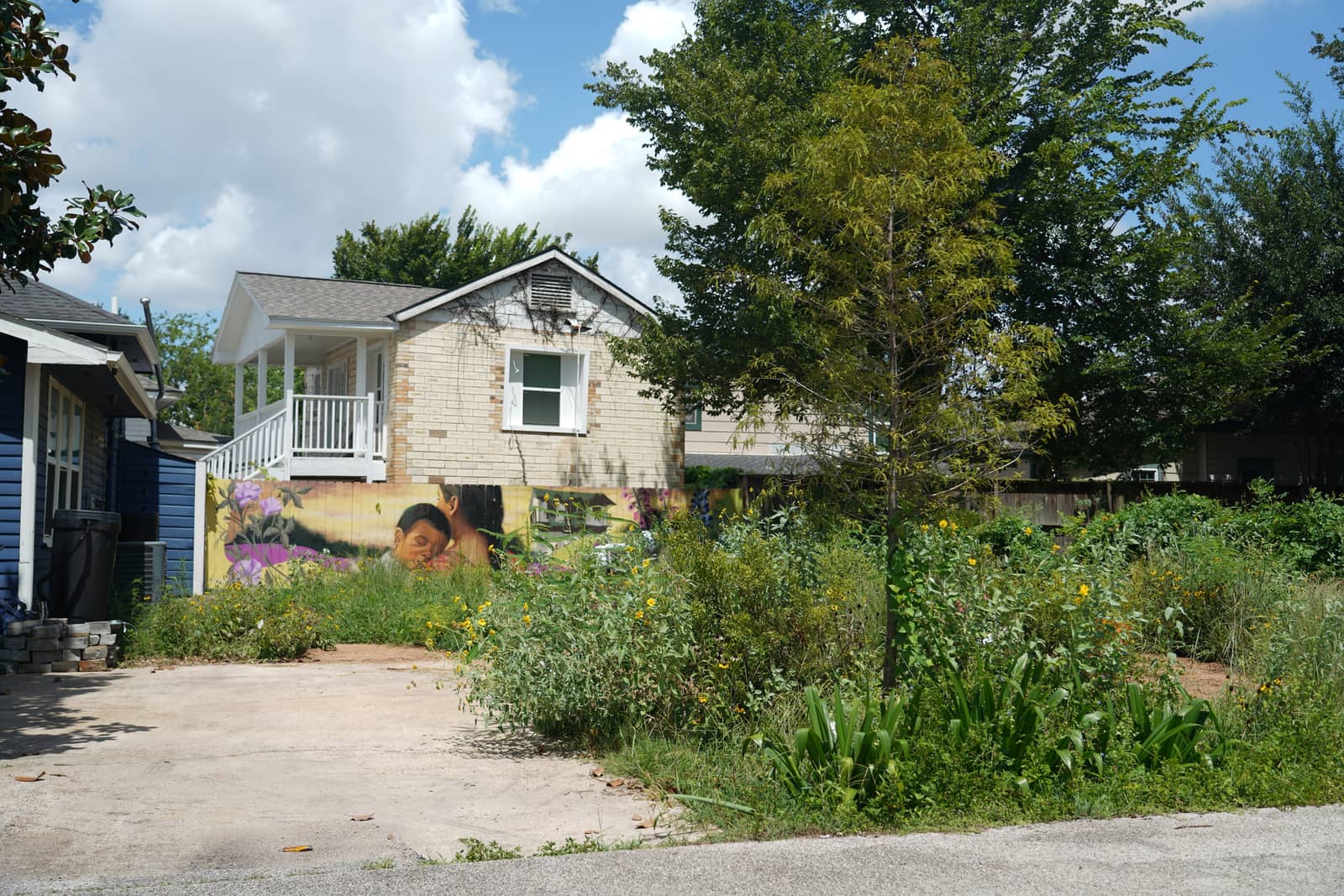
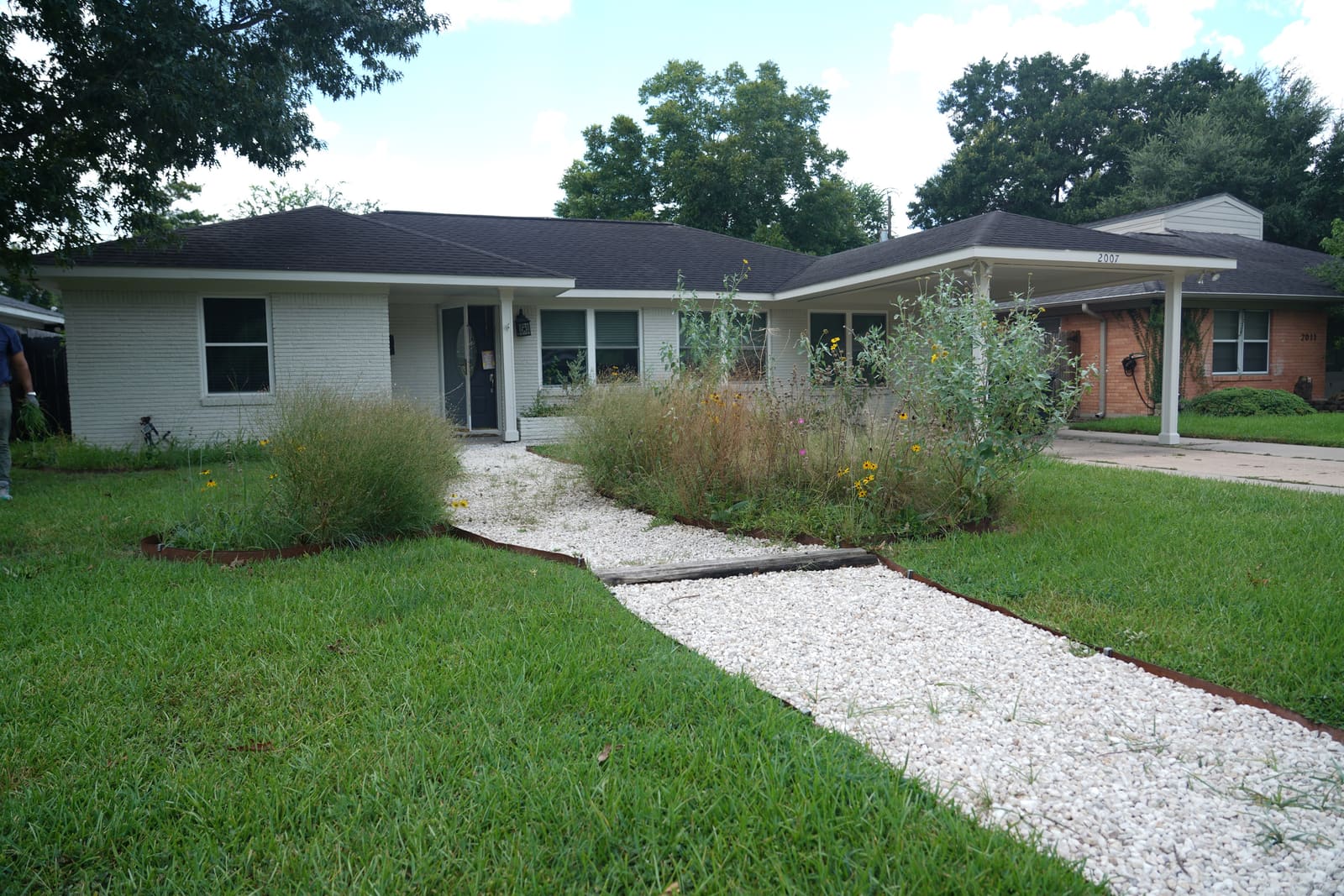
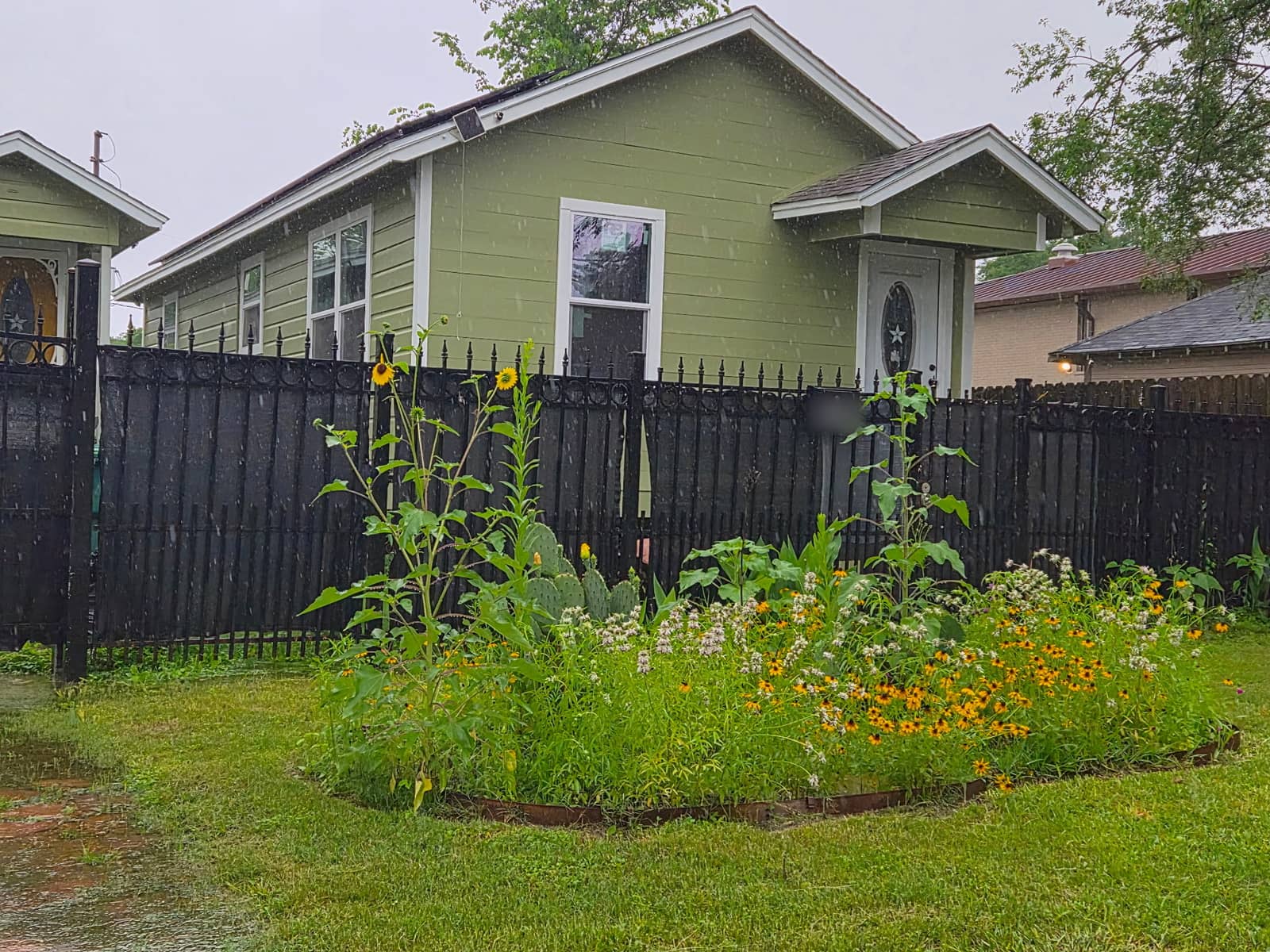
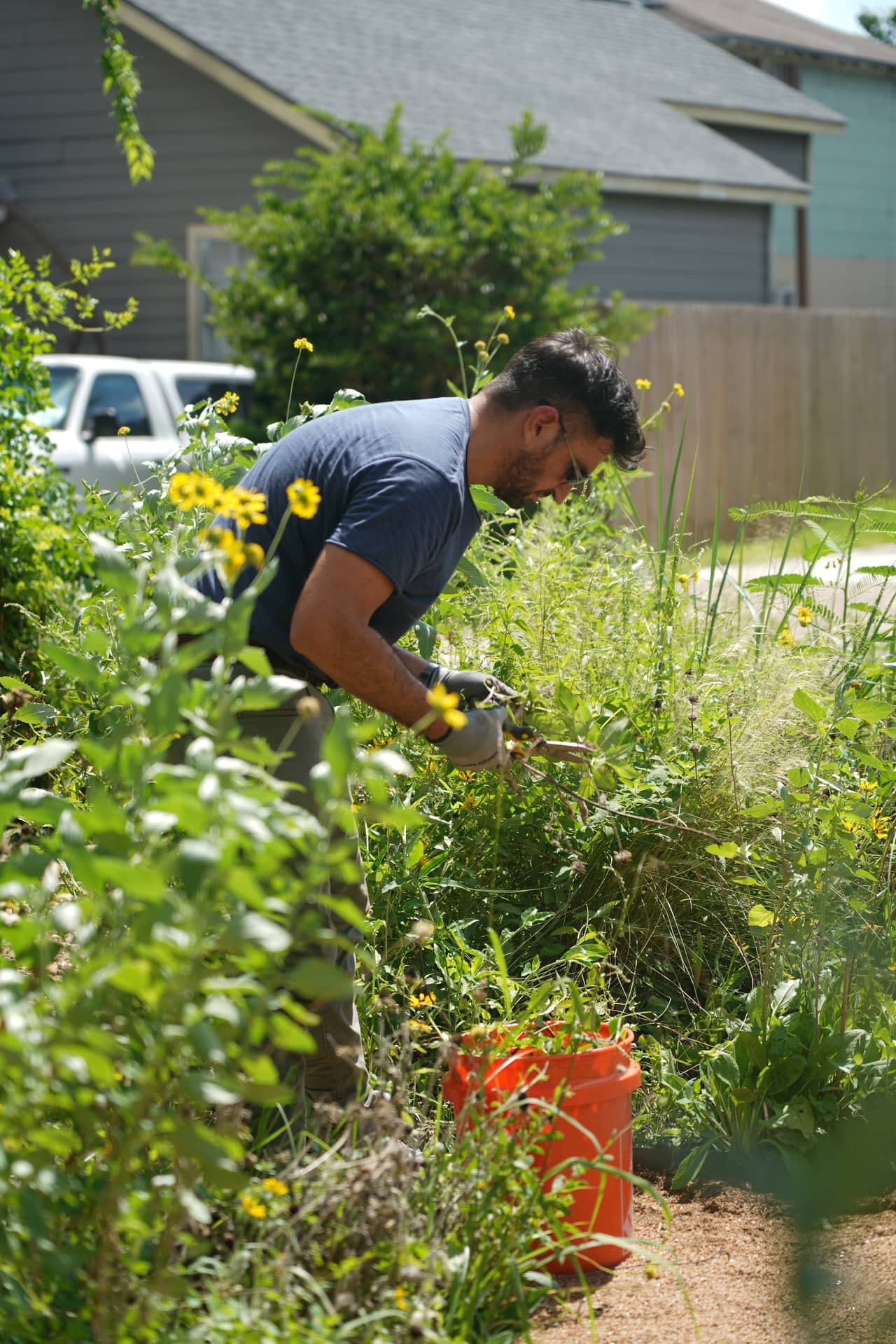
This city is full of beautiful, inspiring examples of people turning their front yards into something that makes the city better, and of small groups of neighbors doing the same for a park, an esplanade or a garden they keep together. It does not yet have enough of us recognizing that work, supporting it and bringing it to the next level.
The tools of conservation were made for land that is few, large and still, and they do not fit a yard or a neighborhood park. Holon builds what your work needs to stand on, alone in a front yard or together in a shared place: a standard, a record, the networks and the support that bring it to the level it deserves, and a way to compose what you keep with what is kept around you. If you fund this work, that is what a gift buys. We start in Houston.
Gifts support Holon Foundation's work preparing the program described on this page and travel through our regular, secure giving page. Holon Foundation is a 501(c)(3) nonprofit; gifts are tax-deductible as allowed by law. Nothing on this page is an offer of funds to any person or address.
The people doing this deserve support made for a yard. What exists was made for something else.
Made for the few and large
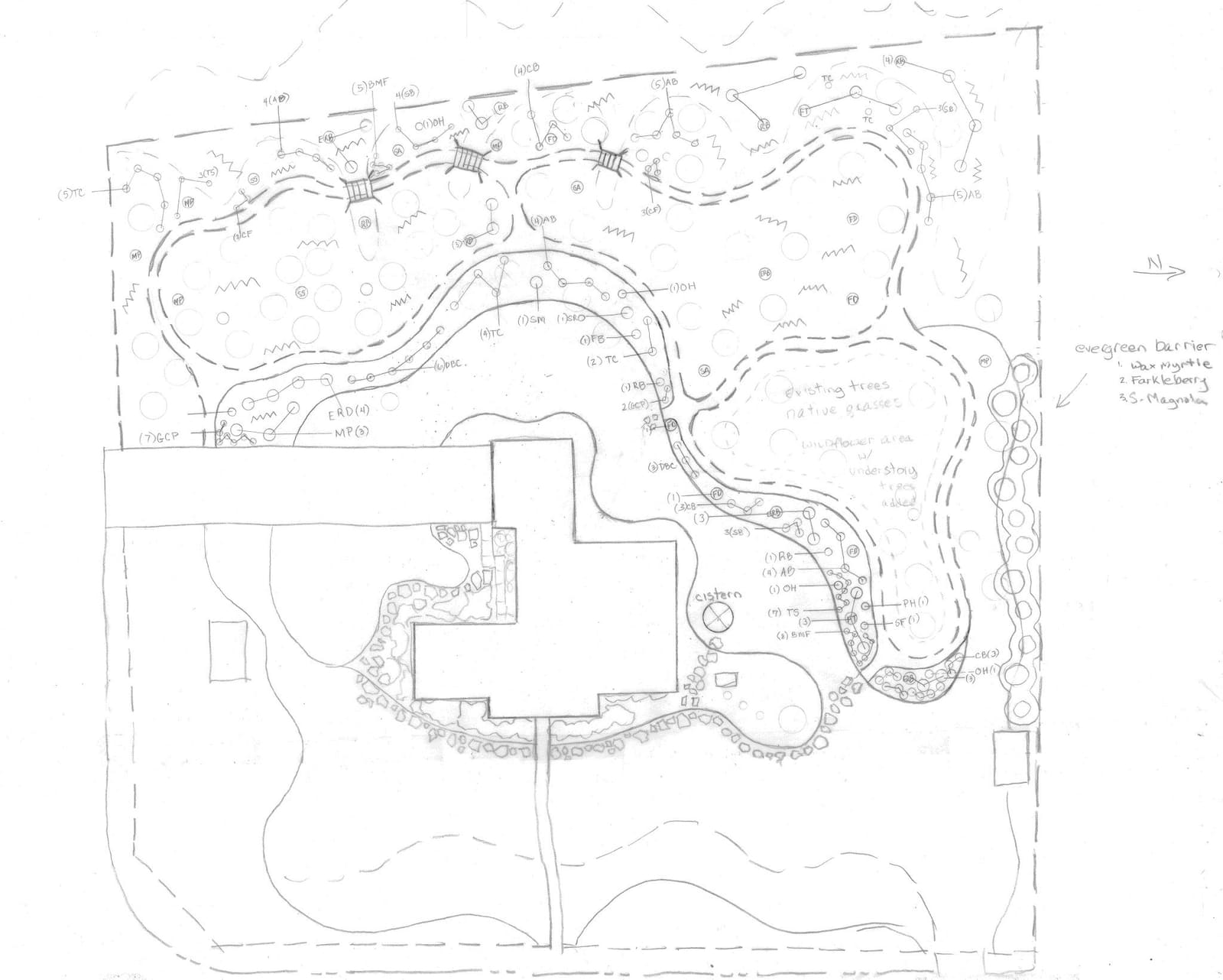
A center that sets the standard, a trained monitor who comes to look, a legal instrument that binds the land for good, and one unit, the acre, that everything is counted in. It is remarkable, and it assumes the things being kept are few, large, stable and far enough apart to be looked at one at a time.
A yard was never in the count
Checking one large parcel costs what it costs: a rational price for a ranch and an absurd one for a front yard. When England made biodiversity gain mandatory in its planning system, it considered counting what grows in the gardens of new homes, and two years later set the idea aside, citing how hard those gardens are to monitor. Nobody decided that yards do not matter. The arithmetic of small places decided.
A different kind of system
A city keeps thousands of small places, each different, each changing, each tied to its neighbors by water, pollinators, shade and friendship. That is not a smaller copy of the large-land problem. It is a different kind of system, and it needs foundations of its own.
The support cannot be borrowed whole from the systems we already have. It has to be built for the yard, and that is what Holon does.
The capacity a field needs to stand on.
We are engineers and systems people who spent our working lives inside industries where mistakes are expensive, and we came to this work from there, with a great deal to learn from the people who came from ecology. What we bring is a specialty of our own: how the parts relate.
Over the past year, before any grant, we built the first parts of that capacity.
Money is not the only thing this carries. Along the same road move help, materials, knowledge, hands and standing, between neighbors who see each other's work on foot. The trust is real because the neighbors are.
Who we are, and the long version of this argument →
Built before any grant
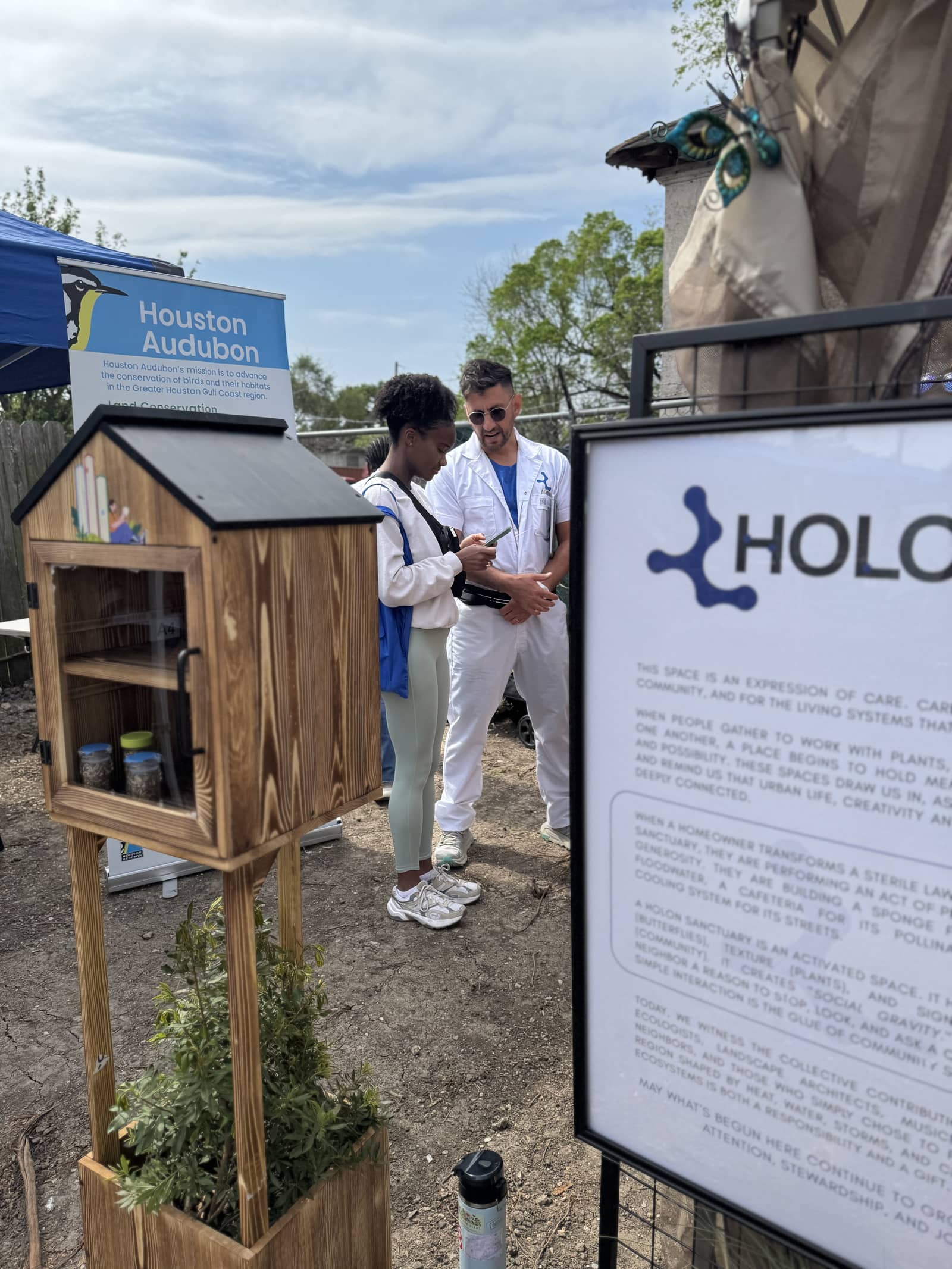
- A standardWhat a place does across ten dimensions, never added into one number. Drafted over the summer, to be given away: openly licensed and revised in public.
- A catalogMore than fifty commitments a neighbor can make about their own ground, with paths for renters as well as owners.
- A way to witnessNeighbors see each other's work on a schedule, rotated so nobody is only ever seen by a friend, and stand behind it. Designed; no round walked yet.
- A record, and its privacyHeld by the neighbor, in bands and never a score; daylight, front yard only, no people in photographs.
- The networks and the knowledgeThe map of what a city already has; years of work with local producers, neighbors and volunteers; a plant library, guides to the rules, a card that records what a yard does; the ways to afford it.
- The softwareA record that works offline, a governance system with append-only trails, and more than thirty checks before anything ships.
March to September 2026 · financed by given time · grants received: none
The work is already happening on your street. Here is the support.
You keep a yard, a schoolyard, a church lot, a strip by the bus stop, a seed library in a box. You were never told you were qualified, and you are the practice itself. What the practice deserves is everything a society builds around a practice it takes seriously, and this is the part of it that exists today.
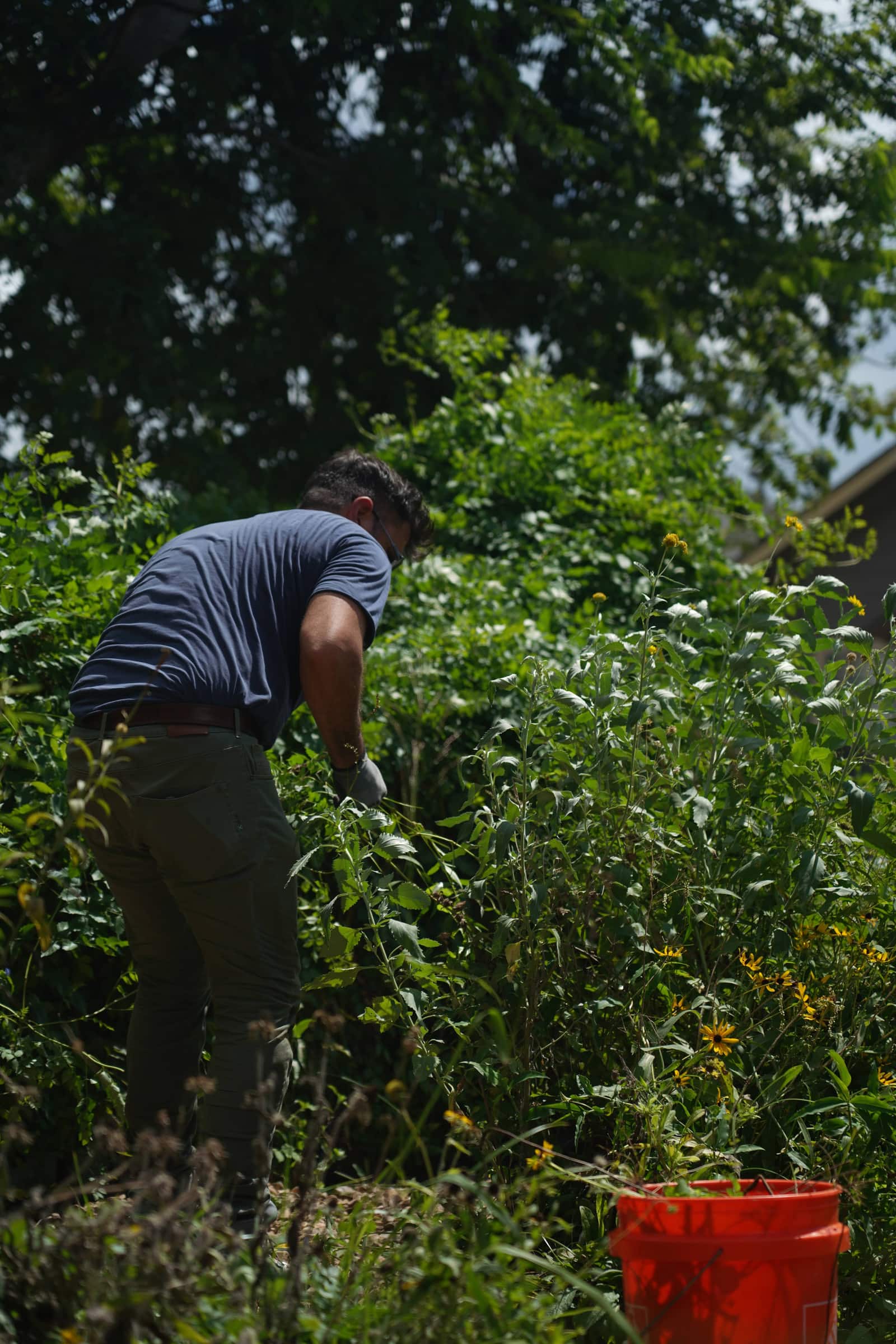
Start with a free account and your yard's own record. The witnessed round, and the support that follows it, open with the first neighborhood.
A gift here builds the capacity of a field.
A gift to a large land trust buys acres. A gift here buys what a city's small places need: the systems and the infrastructure, an open standard for urban conservation drafted for public comment, the competencies of the neighbors who will witness the work, education and programs, the events where the field meets, and the milestones that tell everyone where it stands.
Built once, they are not paid for again in each new neighborhood.
What a gift supports today
The preparation: training, materials and the groundwork of the first neighborhood, through the Foundation's regular giving page. The program's own fund opens only when its legal and accounting groundwork is confirmed, and this page will say so plainly when it does.
The method, the record and the software already exist, built before any grant. A first gift funds their first use. We bring the plan, the budget and the written conditions under which we would stop.
Three things, and then again.
Commit
A neighbor, a household, a church, a corner store, a school, makes public commitments about their own front yard.
Witness
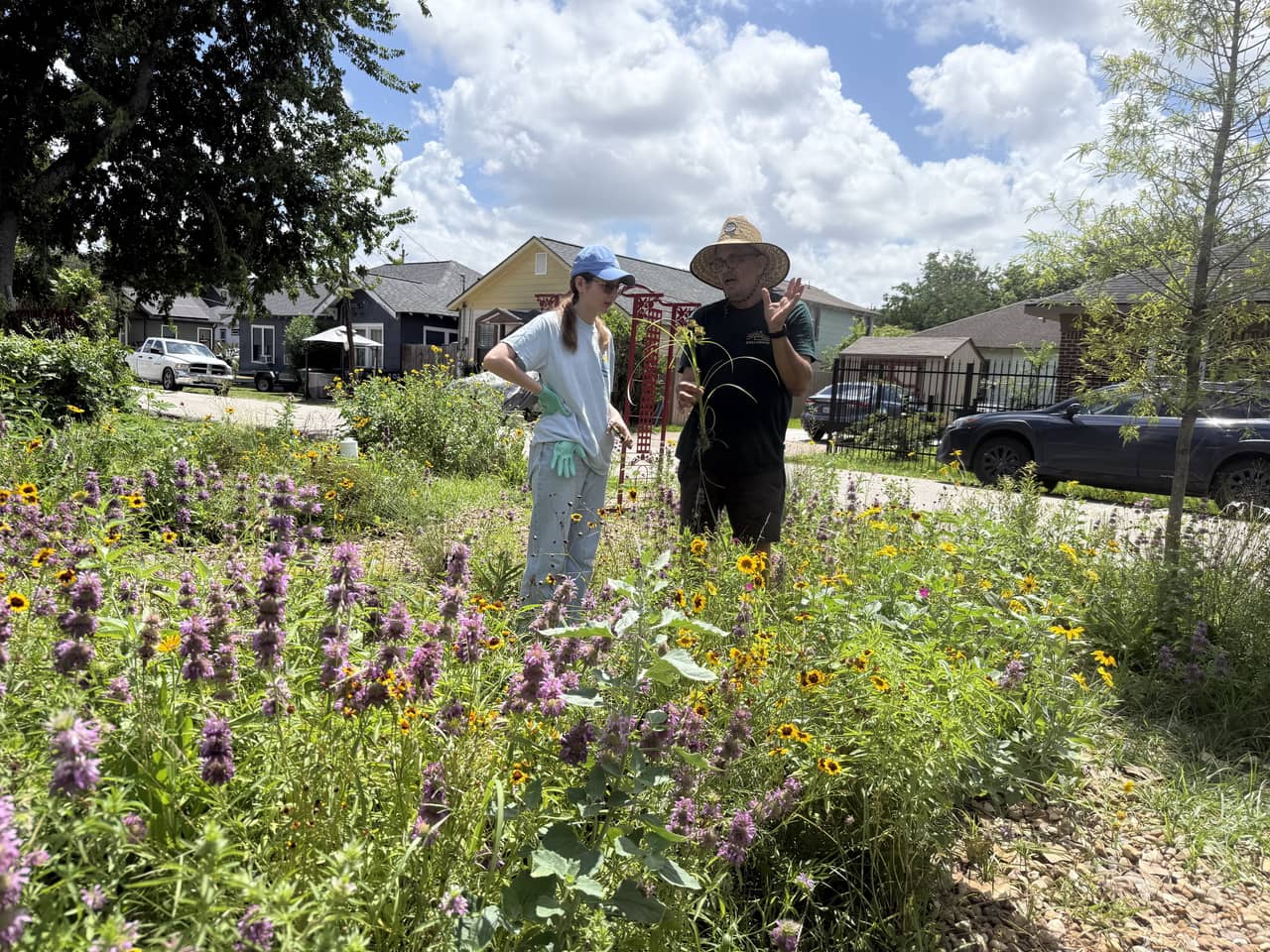
Neighbors, trained and commissioned, walk a short scheduled round and see what is standing.
Support
Support follows what neighbors witnessed, not what was promised. Every round is paid work at a published fee.
Repeat Rounds rotate, seasons pass, and the record grows. A mesh of ties forms, in every direction.
Money can buy a garden. It cannot buy a kept one.
- No score, ever. The record says in words where a yard stands. The moment it says a number, the number becomes the thing people garden for.
- The walker is paid the same for a no. The fee is published end to end, so nothing about the money wants a particular answer.
- We never check work we built. If Holon put the plants in, Holon does not get to say they are thriving.
- You cannot pick a household. Gifts fund a neighborhood and a standard, never a chosen household. Ask us to choose a family and we decline, and say why.
- Nobody is the sole witness of their own yard. A household’s own word counts, and is never the only word.
Not a number
A band, said in words
And how it stays honest
- Support follows the keeping, not the purchase, and returns each season only if the keeping does.
- Help flows most where it is needed most: the design is capped and tiered.
- The highest value belongs to what no one can do alone, and it is shared equally.
- The books stay open: where support went, published every year, in plain tables.
- Neighbors walk the rounds, trained and commissioned, at times the household chose.
- The checklist carries the expertise, written so an attentive neighbor can use it.
- Different eyes across seasons outweigh one voice repeated.
- Paid professionals re-check a sample of every kind of record, and are paid the same whatever they find.
Asked and answered, plainly.
01Is somebody inspecting people's homes?
No. Neighbors look only at the front yard, from the front, at times the household chose, at commitments the household made in public. The household holds the record.
07What does a gift support today?
The preparation: training, materials, and the groundwork of the first neighborhood, through the Foundation's regular giving page. The program's own fund opens only when its legal and accounting groundwork is confirmed, and this page will say so plainly when it does.
02Who walks the rounds, and are they paid?
Trained neighbors, commissioned for the role. Each completed round is paid a flat published fee, the same whether the yard is thriving or struggling. Some choose to serve as volunteers instead, which is their own choice, never a requirement.
11Do you still build gardens?
Yes. The yards Holon built with households are the ground this work stands on, and Holon still helps a household make one real, with hands or with what it knows. Building gardens is one of the ways we help; building what the field needs to stand on is the main work.
12What is urban conservation?
The keeping a city already does on thousands of small places: yards, schoolyards, church lots, the strip by the bus stop. We know the word is borrowed, and that in a city the work is more than ecological; it is the closest word we have, because at its root it means keeping.
03What happens if someone stops keeping a commitment?
The support tied to it pauses, and the standing it built has to be built again. Nothing is clawed back and nobody is shamed. The program pays for keeping, so keeping is the only way to be paid.
09Do I earn points for this?
No. The program issues no points, credits or balance of any kind, and recognizes none issued in its name. What a kept promise builds is a record: nobody can devalue it, and it does not expire while the promise is kept.
04Can renters take part?
Yes, by design. Commitments exist for containers, balconies and shared ground, with lease language prepared so a renter can enroll with their landlord's consent.
05Can a business or organization join?
A church, a school or a corner store can hold commitments like any household. Larger organizations are welcome to keep a witnessed record and to stand in a corridor, and the design reserves payments for households and small community organizations.
13Why not use a certification that already exists?
Every property a city of small keepers needs exists somewhere in the field. What it needs is a standard that holds them together: one that works at the scale of a single yard, records what a yard does in a shared form that can be compared and combined with its neighbors', covers the social and cultural life of a place as well as its ecology, is openly licensed and changed in public by people who do not sell the certification, and has the result checked in person by someone independent of the owner. So we drafted one, for comment.
06How will the first neighborhood be chosen?
On published criteria: heat, flood exposure, need, and a base of neighbors ready to serve. Decided in the open, not by any donor.
08When will there be results to see?
The first neighborhood is planned at fifty to sixty participating households and small organizations, with about 165 rounds a year, and findings reported in early 2028. Before then we share our method, never claims.
10Is there evidence this works?
The closest evidence is a randomized trial in Philadelphia, published by Branas and colleagues in the Proceedings of the National Academy of Sciences, where cleaning and greening vacant lots, and nothing else, was followed by less gun violence and less fear of going outside. We cite it for what it found there. Whether it holds between neighbors on a Houston street is what the first neighborhood exists to find out.
As of
- The Board made this the Foundation’s main work.On 2 October the Board of Directors adopted this program as the Foundation’s principal program, and set what this page may say.counted
- The support, written down as one list.Forty ways Holon helps someone keeping a yard, or a place a few neighbors keep together, each marked with where it stands: twenty-two open to anyone, nine more with a free account.counted · See the list
- Volunteering, opened to every organization serving the commons.A place where a person says what they will do, and when, and a board where any organization serving the commons posts its own opportunities, free.counted · Volunteer
- The promises, written down where anyone can read them.Twenty one promises are now set out in the open, each with a permanent code, alongside five sets a neighbor might choose. The full list is longer.counted · Read the list
- A way to write down what a yard does.Ten dimensions, from what lives in a yard to what the street sounds like, and a rule that they never collapse into one score. Written and dated.counted
- The round, and the rules around it.Six movements, a paper kit for a yard with no signal, a published fee that is the same for a yes or a no, and the front yard only.counted
- The place the record lives.One system holding a yard’s promises, its evidence and its rounds. It works with no signal, because the neighbor walking a round often has none.counted
- Our own books, opened to ourselves first.Decisions, grant applications, documents and tasks moved into one system, so anything we say here can be checked against what we recorded.counted
- Six front yards, and a practice older than the organization.Six front yards built with the households who keep them, documented by agreement. The archive photographs start in 2009. What began in 2026 was the writing down.counted
14 gardens hold a record in the portal today · counted
When something here changes, the date at the top changes with it. If that date is old, the page is telling you the truth about that too.
What we cannot show you yet
- Whether it holds between strangers. The six yards were built by us, with people we know, and seen by nobody in particular. That is evidence of craft, not yet evidence that neighbors can stand behind each other’s work.
- What happens after we leave. Nobody followed those six yards past handover. The next group records it from the first day, which is the only reason we can say this out loud.
- Where the given work came from. Most of what built this organization is work people gave rather than money, and until this year nothing could show where any of it came from.
The standard, soon open for comment
A draft standard for the keeping a city does at the scale of a yard: ten dimensions and a record that composes, to be openly licensed and changed in public. Every record says which dimensions it touches and never how many. The draft opens for public comment when its repository does, and this page will say so.
Trees where the walk bakes · Rain kept on the lot, not sent to the street · A patch left unmown
Biodiversity · Water · Heat · Soundscape
Pots along the rail · Kitchen scraps composted upstairs · Greens growing in the window
Biodiversity · Food · Culture · Local economy
Five ways in. Every one of them is open now.
Write to us